
Orem Records and Their Keepers
Access depends on both the record type and the government that created it. Orem is in Utah County but is not the county seat. That is why a city council record belongs with Orem, while a deed usually belongs with the Utah County Recorder in Provo. The table leads with the keeper, then distinguishes an online finding aid from the copy itself. “Restricted” does not mean the record never exists. It means eligibility, redaction, or a separate court rule controls access.
| Record set | Custodian | Online route | Coverage and access |
|---|---|---|---|
| Deeds, liens, plats | Utah County Recorder | Land Records and Maps | Official series from 1870; computerized names from January 1978; free images and office copies |
| Property and tax | Assessor, GIS, Treasurer | Land Records, Parcel Map, tax search | Current owner, parcel, tax, and map data; free portals |
| Court and probate | Orem Justice Court or Fourth District Court | Xchange | Paid web summary; clerk and public-terminal fallback; restricted cases excluded |
| Birth and death | Utah DHHS, local health, Archives | Certificate order and historical indexes | Births open after 100 years and deaths after 50; recent copies require eligibility |
| Marriage and divorce | County Clerk, district court, Utah DHHS | Order or case route depends on year | State abstracts cover 1978-2010; public threshold is 75 years |
| City administration | Orem City Recorder or department | Orem records request | GRAMA classification; police and court files follow added rules |
Voter files have their own statutory split and are treated end to end in the Orem voter records resource. Sealed or expunged cases, juvenile matters, adoption files, protected voter details, recent vital certificates, and personal motor-vehicle data are not opened merely because another government index is public.
Orem Deed Records Cross 1978
The Utah County Recorder organizes recorded instruments by principal-party name, land location or abstract, and document type. A principal party may be a grantor, grantee, trustee, beneficiary, or lien claimant, so the indexed role matters. Official books, film, and images run from 1870 to the present. Yet computerized alphabetical names begin in January 1978, and computerized abstract data begins in May 1980. Older handwritten names continue through January 1978; handwritten or typed abstracts continue through September 1985.
That overlap is useful, not a conflict. If a surname search misses an older Orem deed, take a parcel serial, subdivision, lot, or legal description to the abstract, then consult the handwritten name books. The Recorder can help locate a specific index or document, but it will not conduct a title search or interpret legal language. At the counter, plain copies cost $1 per page, computer printouts cost $0.50, and certification costs $5 per document. Online document images are described as free.
| Recorder search path | Best input | What it locates |
|---|---|---|
| Principal parties | Surname, initials, former or entity name | Indexed role and instrument |
| Land abstract | Serial, subdivision, lot, legal description | Instrument chain tied to land |
| Document type | Deed, trust, release, lien, plat | A narrower instrument class |
Note: An empty online name result before 1978 calls for the handwritten index, not a claim that no Utah County instrument exists.
Orem Property Records Need Context
The Utah County Land Records portal accepts owner name, property address, or parcel serial number. Its result can connect an owner name to a serial, property address, tax area, and years valid. The county Parcel Map adds situs and mailing addresses, a care-of recipient, subdivision and lot, vesting document, and historic geometry. Situs means the parcel’s physical location. Mailing means the destination for a tax notice. Neither proves that the listed owner lives there.
The live property search shows how Utah County separates these fields:
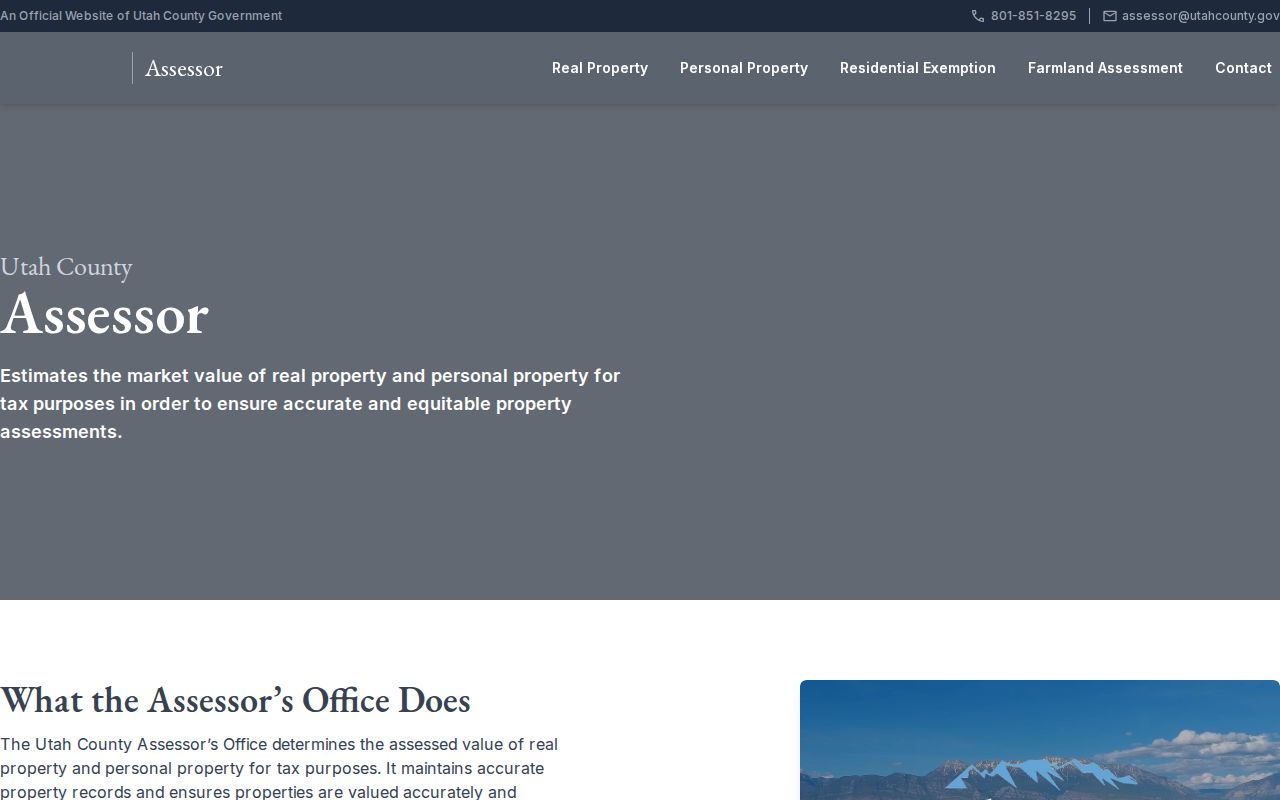
That separation prevents a common error. A trust, company, fiduciary, or care-of name may receive the bill while someone else occupies the site. Save the serial and vesting document, then open the Recorder’s instrument for title evidence. The taxing description helps orient a search but carries a warning that it is not the legal description for legal papers. A historic parcel date marks when geometry entered the property system, not the deed’s recording day.
Utah County Property Watch sends a free notice when a deed, lien, or other instrument is recorded against tracked property. Treat an alert as a prompt to open the official filing. It is not title insurance, cannot decide whether a filing is valid, and does not stop an instrument from being recorded.
Orem Court Records Have Two Doors
Xchange searches public district and justice cases statewide. Orem Justice Court handles municipal traffic, infractions, small claims, and most class B or C misdemeanors. Fourth District Court handles larger civil, criminal, domestic, probate, and guardianship matters. Search controls include jurisdiction, case number, last name or company, optional first name, case type, court scope, dates, and optional birth date. A wildcard after a first-name stem can catch spelling variants.
| Xchange field | Control | Use |
|---|---|---|
| Jurisdiction | Choice | District, justice, or both |
| Search type | Choice | All cases or judgments only |
| Last name / company | Text | Supports the * wildcard |
| First name | Text | Optional; a stem plus wildcard broadens results |
| Case type | Dropdown | Optional case-category filter |
| Search scope | Selector | Statewide, county, or named court |
| Birth date | Date | Optional identity discriminator |
Result rows can show court, case number, filing date, party, role, and a history link. Extended dockets may add attorneys, aliases, hearings, charges, outcomes, balances, or probate roles such as decedent and heir. A docket is the chronological list of activity in a case, not the full evidentiary file. Most district courts entered CORIS by the end of 1998, and public electronic district documents filed since July 1, 2010 can be bought online.
Web access is paid. The dedicated fee page lists $0.35 per search and $1 per document; guest access begins with a $10 credit. Free Xchange terminals may be available at district courthouses and the Utah State Law Library, so verify before traveling. Older cases, sparse converted data, or a needed certified order should go to the clerk. Sealed, expunged, juvenile, adoption, and civil-commitment cases do not appear, while sensitive domestic or guardianship filings may also be private.
Orem Vital Records Change With Age
Utah Code §26B-8-125 sets a moving line between recent certificates and historical public records. Birth records open after 100 years, deaths after 50 years, and marriage or divorce records after 75 years. Before that point, a requester needs the direct, tangible, and legitimate interest required for the record, plus proof of identity and relationship when applicable. Utah has registered births and deaths since 1905. Its state marriage and divorce abstracts cover 1978 through 2010.
Use the issuing Utah County Clerk for a marriage before 1978 or after 2010. For divorce before 1978 or after 2011, identify the district-court case and decree. Eligible applicants may order a Utah vital record online, by mail, or in person through most local health departments. The state office itself has no public walk-in window. Mail needs an application or signed letter, current fee, and accepted identification.
The official vital-record order route explains eligibility and delivery:
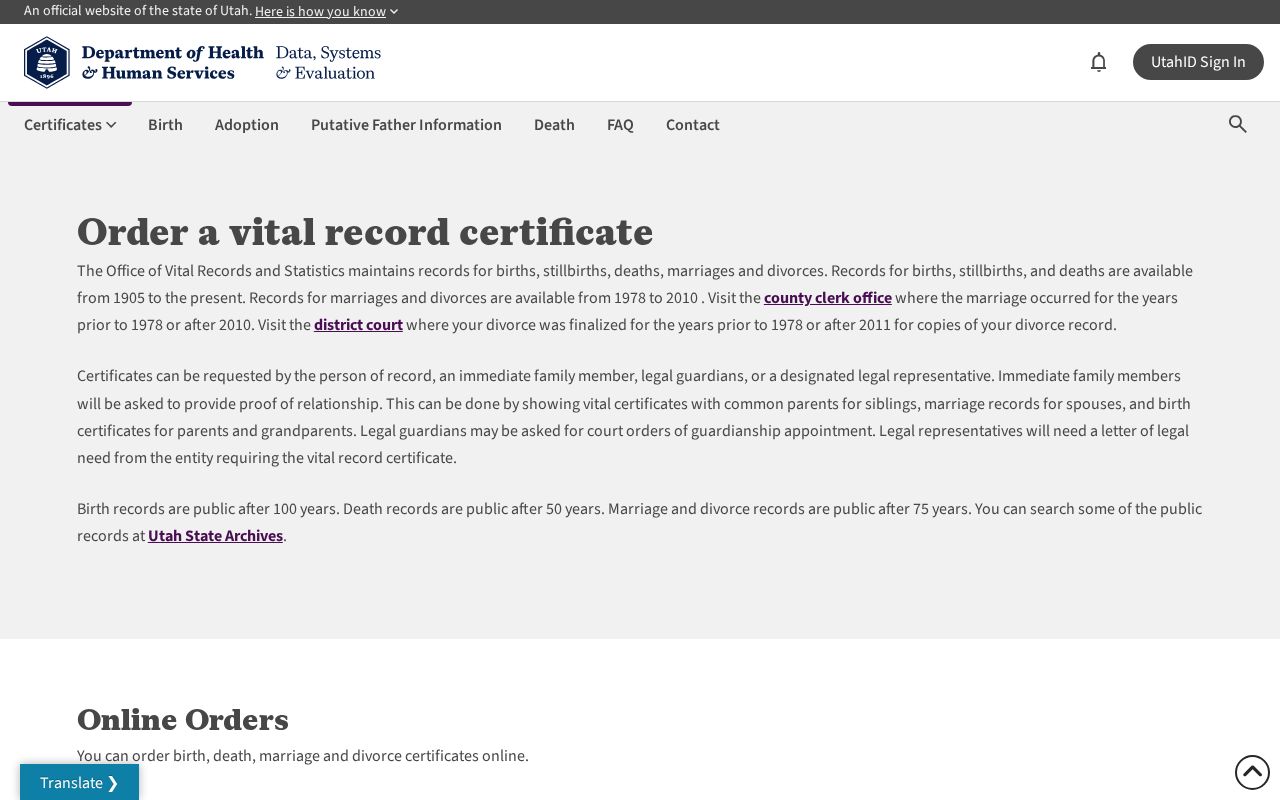
The image also marks the difference between locating an event and obtaining a certified certificate. As of July 1, 2026, a birth or marriage/divorce abstract costs $25 and a death certificate costs $35; mail processing was about six weeks. Once statutory thresholds pass, Utah State Archives becomes the research path for aged series and growing indexes.
Public Records Orem Keeps Locally
Orem City Recorder is the municipal records officer for council, administrative, licensing, permit, and other city files. A focused request names the department, record type, person or address, and date span. GRAMA requires access to an existing record; it does not force the city to research a question or create a new report.
The Orem records-request route is the city’s direct online channel:
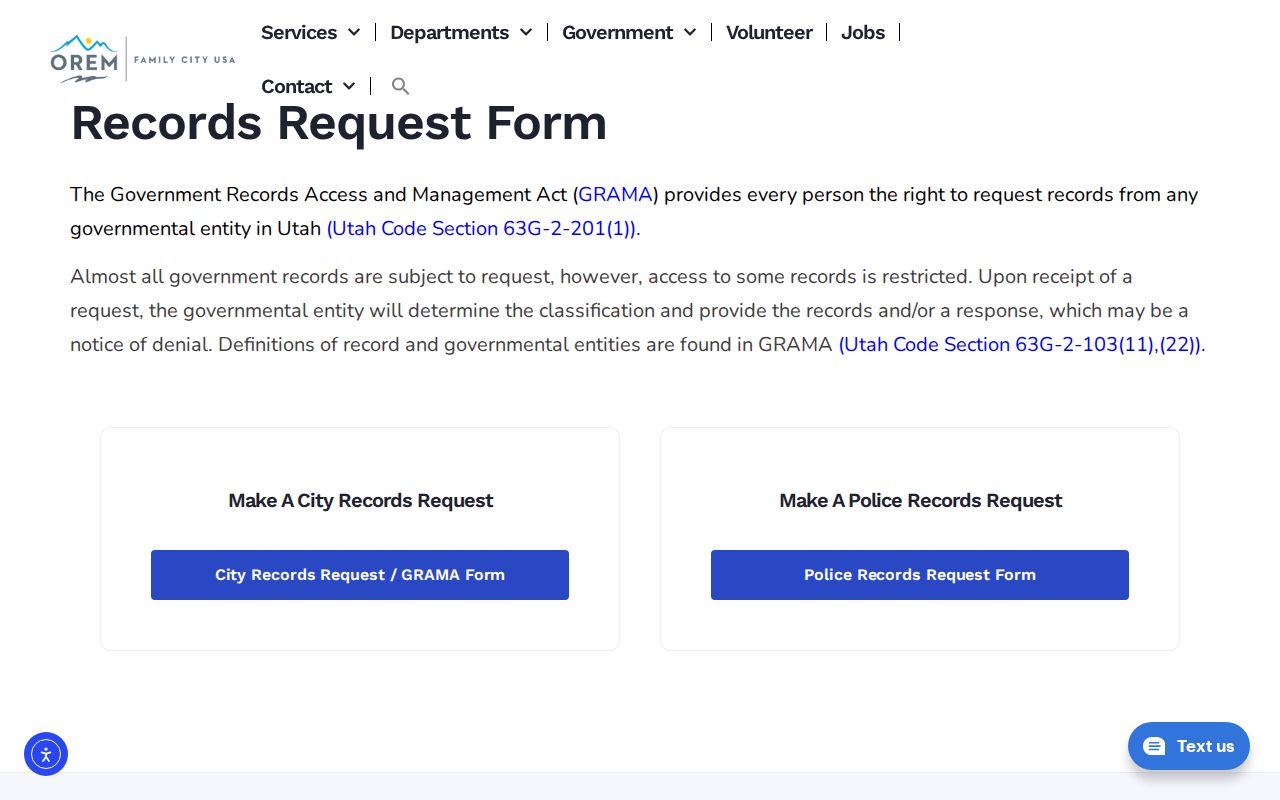
The request page is the right fallback when a council, permit, or administrative file is not in a dedicated portal. Police records may use a protected request system or the weekday counter at 56 N State Street. Orem Justice Court records go to its clerk at 97 E Center Street, not to a city GRAMA request. For a permit, use the address as the stable key and include any permit number, applicant, type, status, and date already known.
Orem Records Offices and Portals
These offices cover the most common access routes. Calling first can confirm the keeper, counter access, current hours, and the exact identifier needed. Utah County offices are in Provo because Orem is not the county seat. The research did not verify posted Orem City Recorder counter hours, so confirm them before a trip.
Utah County GRAMA Officer
100 E Center St., Suite 2100
Provo, UT 84606
801-851-8026
Note: Ask for the specific record or index help; the Utah County Recorder cannot provide a title conclusion or legal description by telephone.
Orem Record Copies and Fees
An index result is a finding aid. An image shows the filed document. A certified copy carries the custodian’s formal attestation. Those products have different costs and uses. Inspection of a public record under GRAMA is free. Utah Code §63G-2-203 permits actual duplication or compilation costs and generally gives the first 15 minutes of staff time without charge. A public-benefit fee waiver may apply, but the requester should explain the basis.
- Index
- A name, case, parcel, or document list used to locate the held record.
- Certified copy
- A copy authenticated by the custodian, often with an added fee.
- Custodian
- The government entity that retains and controls access to the record.
- Exemption
- A legal reason to withhold all or part of a record from general access.
Recorder copy fees are separate from its $40 charge to record a new instrument. Xchange’s current dedicated schedule controls over inconsistent text once seen during registration. Vital fees changed on July 1, 2026. Date-stamp any quoted fee and confirm it at the official source before ordering.
Orem Custody Records Are Time-Sensitive
The Utah County Sheriff Inmate Search accepts a name or arrest date and warns of a 24-hour display delay. Orem Municipal Court appears under the OMC code. Booking data may show custody, charges, bond, and release codes, but it does not by itself prove a conviction. A same-day absence is also inconclusive because the posting delay may still apply.
Utah Department of Corrections maintains a separate offender search for current prison, probation, or parole supervision. It is not the county jail roster. Federal custody uses the Bureau of Prisons locator. Name matches should be checked against booking or offender number, agency, date, and court case because custody status can change quickly and a charge remains an allegation until resolved.
When Utah Records Stay Closed
GRAMA classifies records as public, private, controlled, or protected. It does not override the rules for courts, recent vital certificates, sealed or expunged cases, or federal motor-vehicle privacy. Judicial Rule 4-202.02 also limits sensitive domestic, stalking, guardianship, and related filings, even when a public case history or final order remains available. A public caption is not permission to obtain every attachment.
A denial should identify its classification or legal basis. Redaction may allow release of the open part while shielding protected facts. For recent vital records, eligibility and identification control the copy. For older records that have crossed the 100-, 50-, or 75-year threshold, the State Archives may provide a public index or transferred series. Public availability never authorizes impersonation, repeated unwanted contact, or access to another person’s account.
Orem GRAMA Appeals Changed in 2025
If an agency denies a GRAMA request, the first appeal goes to that entity’s chief administrative officer within 30 days. No response by the statutory deadline counts as a denial. In 2025, Utah created the Government Records Office as the current second-level appeal forum, replacing the State Records Committee. Its process does not cover court, legislative, or private-company disputes.
Keep the original request, submission receipt, denial or proof of no response, first appeal, and decision. The Government Records Office submission asks for requester and respondent details, the relief sought, hearing-location choice, and a supporting attachment. That paper trail matters because it shows what was asked, when the clock began, and which reason the keeper gave.
Request Orem Public Records Precisely
Under Utah Code §63G-2-204, any person may request a record from the government entity that retains it. A written request gives the requester’s name, mailing address, daytime phone, email if willing, and a reasonably specific record description. The agency ordinarily acts within ten business days, or five when expedited disclosure benefits the public. It may provide the record, deny with a legal basis, identify another keeper, or explain an extraordinary circumstance and response date.
- Identify the city, county, court, or state custodian. Use the dedicated portal first when one exists.
- Describe names, addresses, dates, record type, department, and known case, parcel, license, or document numbers.
- Choose inspection or a copy, state the preferred format, and set a maximum amount authorized for costs.
- Submit through the office’s web route, form, mail, or counter. Save the receipt and a copy of the request.
- If denied, read the cited basis, narrow the request if useful, or file the first appeal within 30 days.
Use records lawfully. Open records support personal research and civic transparency. They do not permit stalking, harassment, intimidation, impersonation, or harm.
A narrow request is easier to locate and price. It also lets the custodian separate an open record from protected material without guessing what the requester meant.