
Finding People Through Orem Records
Choose the first record by what is already known. A current street address points to the Utah County parcel roll. A full name can lead to Recorder instruments, court parties, professional licenses, business filings, or cemetery entries. An older address needs more care because Orem uses a directional grid and once appeared in records as Provo Bench. Phone and email results from a broad name search can help frame the inquiry, but an official file provides the best source for a recorded fact.
Keep each identifier found along the way. Parcel serials, document numbers, case numbers, license numbers, and cemetery lots separate people who share a name. Then check the result against an independent source. Dates and party roles help reject false matches. An owner name plus a matching vesting deed is stronger than a city name alone, yet neither proves that the owner lives on the land.
- Search the county owner roll when an address or owner name is known.
- Open the vesting instrument and note each indexed party's role.
- Check Xchange for a matching court party, case type, and date.
- For family history, pair cemetery or obituary details with probate and vital records.
- Use the correct clerk, counter, archive, or GRAMA request when the online trail ends.
Why Orem Searches Reach Provo
Orem is a city within Utah County, but Provo is the county seat. That split controls where most lasting people records are kept. Orem holds city administration, business licenses, permits, police material, cemetery data, and limited-jurisdiction court files. The county offices in Provo hold deeds, property assessment data, marriage originals, elections, taxes, and many departmental records. Fourth District Court also handles district, probate, and guardianship cases.
Start with the office that created or retains the record. A city request cannot produce a county deed, and GRAMA does not replace the courts' judicial access rules. The detailed Orem public records access route separates these custodians, fees, and request methods.
Orem Search Offices and Keepers
Three desks cover many name-to-record trails. The Recorder links named parties to land instruments. The County Clerk holds marriage originals and election records. Orem's City Recorder routes requests for existing municipal files. The Assessor and GIS viewer add parcel identity, mailing and situs addresses, subdivision data, and the current vesting document.
Utah County Clerk
111 S University Ave.
Provo, UT
801-851-8109
Marriage and elections channels
Call first when the exact record series is unclear. Staff may identify a keeper or index, though the Recorder will not conduct a title search or interpret legal documents.
Orem Names Across the 1978 Divide
Utah County's official recorded instruments begin in 1870. The computerized name index, however, begins in January 1978. Online abstract data starts in May 1980. A blank web result therefore says little about an older Orem owner, lien, easement, or trust deed. Handwritten alphabetical indexes continue through the earlier period, and typed or handwritten abstracts remain part of the office trail.
The Recorder's search choices show the available index routes. The captured portal view below is useful before deciding whether a name, abstract, or document search fits.
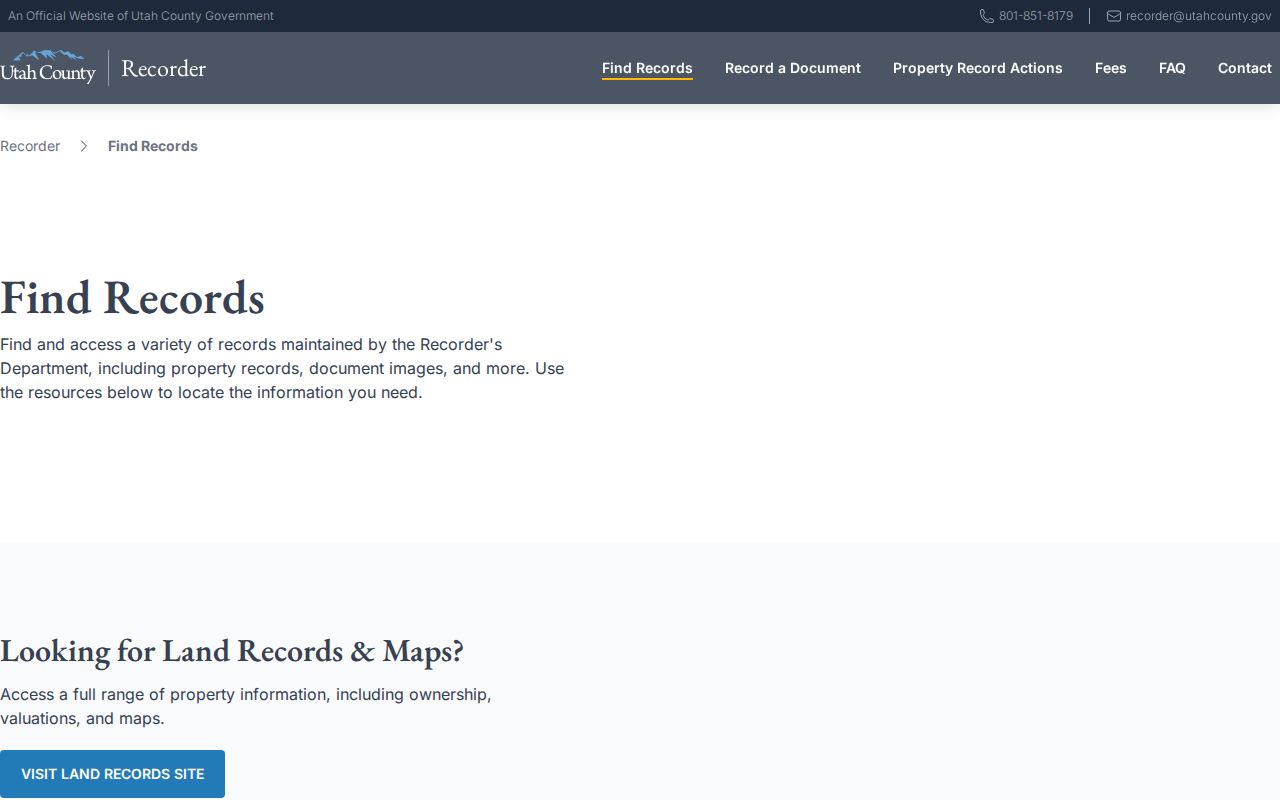
When a surname search fails, try initials, a former name, a trust or company name, and the land's legal description. For pre-1978 work, ask for the handwritten index rather than treating the online cutoff as the start of the record series.
- Grantor
- The party giving or conveying an interest.
- Grantee
- The party receiving the recorded interest.
- Abstract
- A chronological index of instruments tied to a parcel or land description.
- Vesting document
- The recorded instrument on which the current ownership entry rests.
Turning Orem Addresses Into Names
Utah County Land Records accepts an owner name, property address, or serial number. The Parcel Map adds address autocomplete, partial or full owner names, historic dates, and parcel serials with or without colons, spaces, or hyphens. Preserve Orem's N, S, E, and W directions. A dropped direction can send the search to a different street.
The official Utah County Parcel Map supplies the visual source for this workflow.
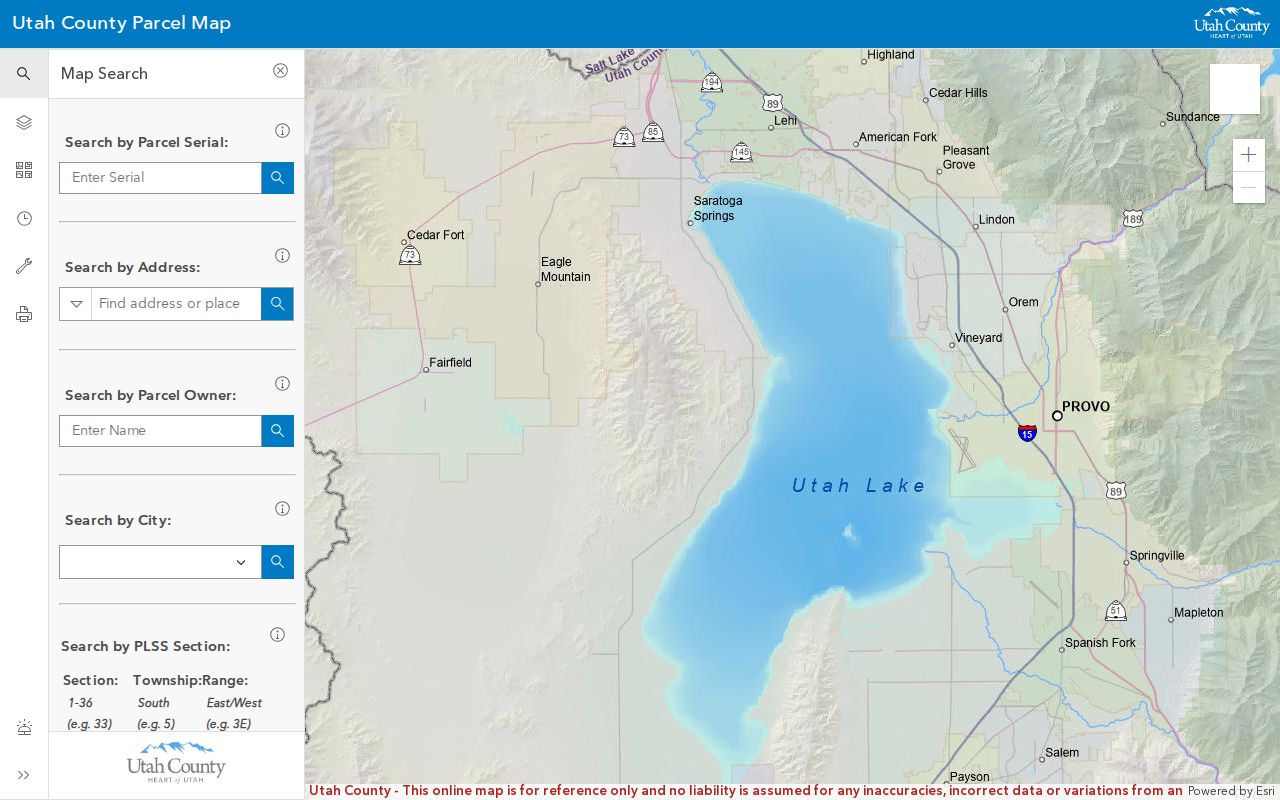
Read the result as separate facts. The situs address is the land's physical location. The mailing address is where the tax notice goes. A care-of name may identify a fiduciary or bill recipient. None alone proves residence. Follow the parcel's vesting instrument into the Recorder index, then trace earlier instruments by legal description when the street number has changed.
Note: A historic-parcel date marks entry into the property system, not the date a deed was recorded.
Searching Orem Court Party Records
Orem Justice Court covers local traffic matters, infractions, small claims, and most class B and C misdemeanors. Fourth District Court handles felonies, class A misdemeanors, major civil and domestic cases, probate, and guardianship. Xchange is the statewide public name-search route. MyCase serves a participant's own case and is not a public people directory.
The Xchange entry page leads to searches by last name or company, optional first name, court scope, case type, dates, birth date, citation, or case number. A wildcard broadens a partial name. The source image below shows the official court-record access point.
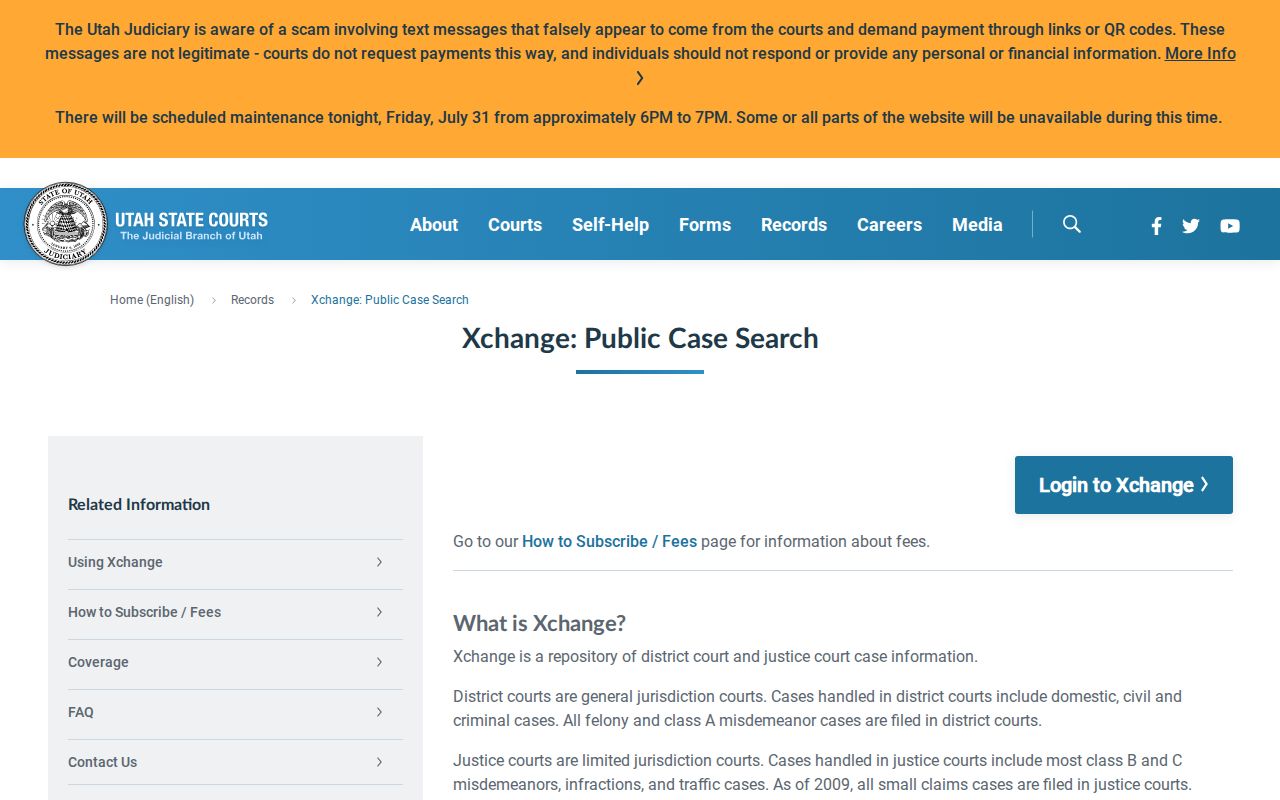
Results may identify the court, case number, filing date, party, role, and history. Extended entries can show charges, disposition, aliases, addresses, attorneys, or probate roles. These are procedural records, not proof that an allegation is true. Sealed, expunged, juvenile, adoption, and other restricted files do not appear.
| Xchange field | Input | How it narrows an Orem search |
|---|---|---|
| Jurisdiction | District, justice, or both | Selects the court level |
| Last Name/Company | Text with * wildcard | Required name route with partial-name support |
| First Name | Optional text | Reduces common-surname matches |
| Search Scope | State, county, or court | Focuses results on Utah County or an Orem court |
| Case Type | Dropdown | Separates probate, civil, criminal, and other cases |
| Date panel | Filing, disposition, or judgment range | Limits results to the relevant time |
Use the fewest filters needed at first. A case number is useful after it is found, but Xchange case numbers are not unique statewide.
| Orem court route | Record scope | Search access |
|---|---|---|
| Orem Justice Court | Local limited-jurisdiction cases | Xchange or court clerk |
| Fourth District Court | District, probate, guardianship | Xchange; terminal or clerk fallback |
| U.S. District Court for Utah | Federal cases | PACER |
Orem Probate Search for Heirs
A probate file can connect a deceased Orem resident with a personal representative, heirs, property, and court action. Search Fourth District Court by the decedent's name and spelling variants. A party role matters: decedent, heir, petitioner, and attorney are not interchangeable. Public orders and letters of appointment carry more weight than a claim made in a petition.
Start with a death date from the city cemetery, an obituary, or a certificate. Search for probate soon after that date, but allow a wider range. Then compare names with property transfers by an estate or trust. Inventories and medical or financial details may be restricted even when the case caption and signed order remain public.
Can a shared surname establish an heir? No. Use the court-assigned role, signed orders or letters, and a separate vital or family notice before drawing that conclusion.
Orem Vital Records Search Paths
Utah began state registration in 1905. Births open to the public after 100 years, deaths after 50, and marriage or divorce records after 75. More recent certified copies require the direct, tangible, and legitimate interest set by state law. Utah County Health Department offers a nearby walk-in channel, while the state accepts eligible online, in-person, and mail orders.
State marriage and divorce abstracts cover 1978 through 2010. For an Orem marriage outside that range, contact the issuing county clerk. For divorce before 1978 or after 2011, use the district court. As records age into public access, state archival indexes and transferred series become the better genealogy route. The birth name index covers 1905 through 1912, with other certificate, Soundex, browse, and request series spanning different years.
Do not treat an index as a certified copy. The index helps locate the event; the custodian's certificate or court decree is the official record for formal use.
Orem Cemetery's Mapped Name Search
Orem Cemetery turns a municipal list into a useful person index. Entries may include first and last name, middle name or initial, sex, birth date, death date, and cemetery lot. A lot link opens the section map. That makes the database valuable when an obituary names Orem but omits the burial spot.
The official cemetery search is shown in the source capture below.
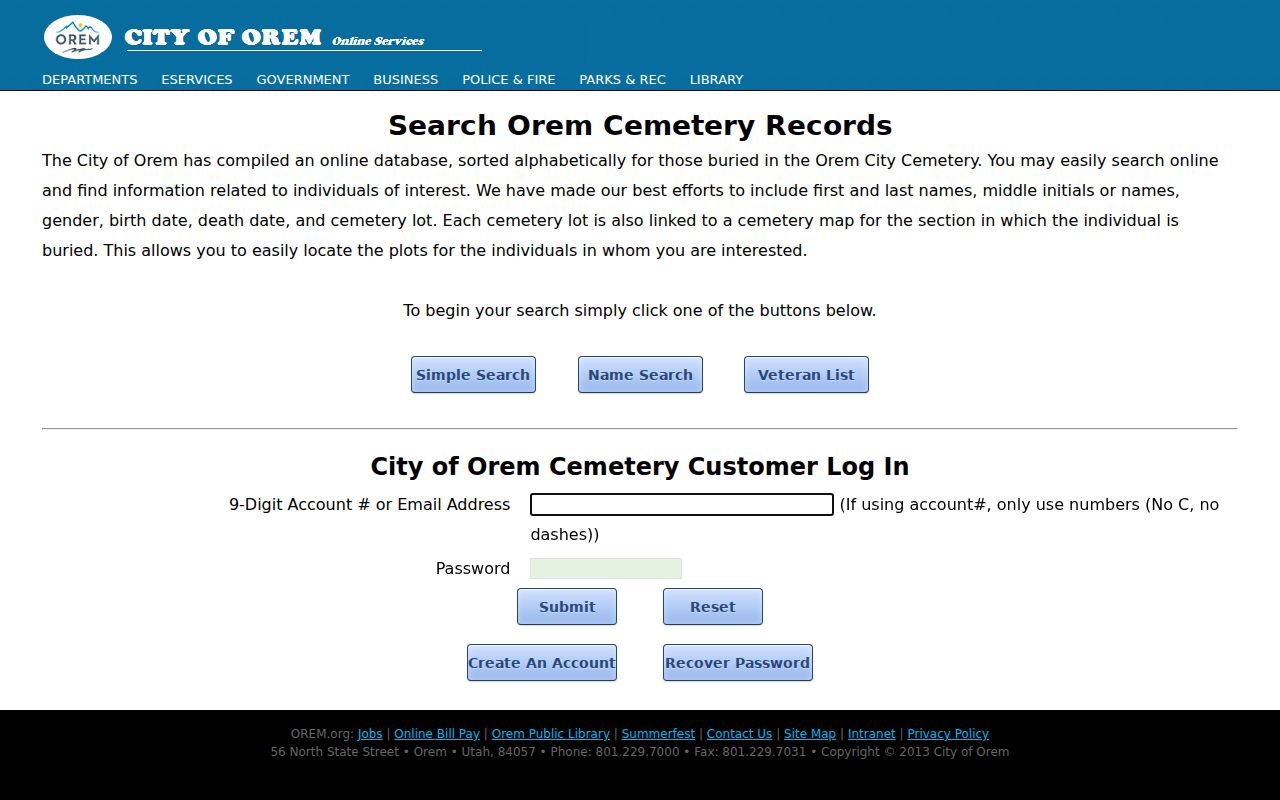
The database states that its information is supplied on a best-efforts basis. Confirm a burial, plot deed, or correction with the cemetery office at 801-229-7124. For family research, pair the lot and dates with an obituary, death record, and any Fourth District probate file.
Provo Bench Names in Orem Search
Older sources may not use the name Orem. The area was known as Provo Bench before the city took its present name, and orchard tracts shaped many early land descriptions. Historic address work should test both place terms. The 1950 census is the latest public decennial census in 2026 under the 72-year rule, but its households and street references must be reconciled with later incorporation and annexation.
Begin with the modern parcel and legal description. Trace deeds through the abstract, then ask Orem Public Library about telephone books, reverse directories, yearbooks, newspapers, and obituary sources for the right year. The library does not publish a verified list of exact Orem directory years, so the reference desk is the sound fallback. City veteran narratives preserved through Utah Valley University can add named life stories, chiefly from World War II and later conflicts.
Checking Orem Business Names
A local business name can lead to three distinct records. Orem's license database checks municipal authorization, category, and date filters. Utah's Business Entity Search can identify a legal entity, registered agent, officers or principals, and filed addresses. DOPL verifies a regulated professional or company by name, profession, or license number. None substitutes for the others.
The official DOPL Licensee Lookup is captured here as one part of that trail.
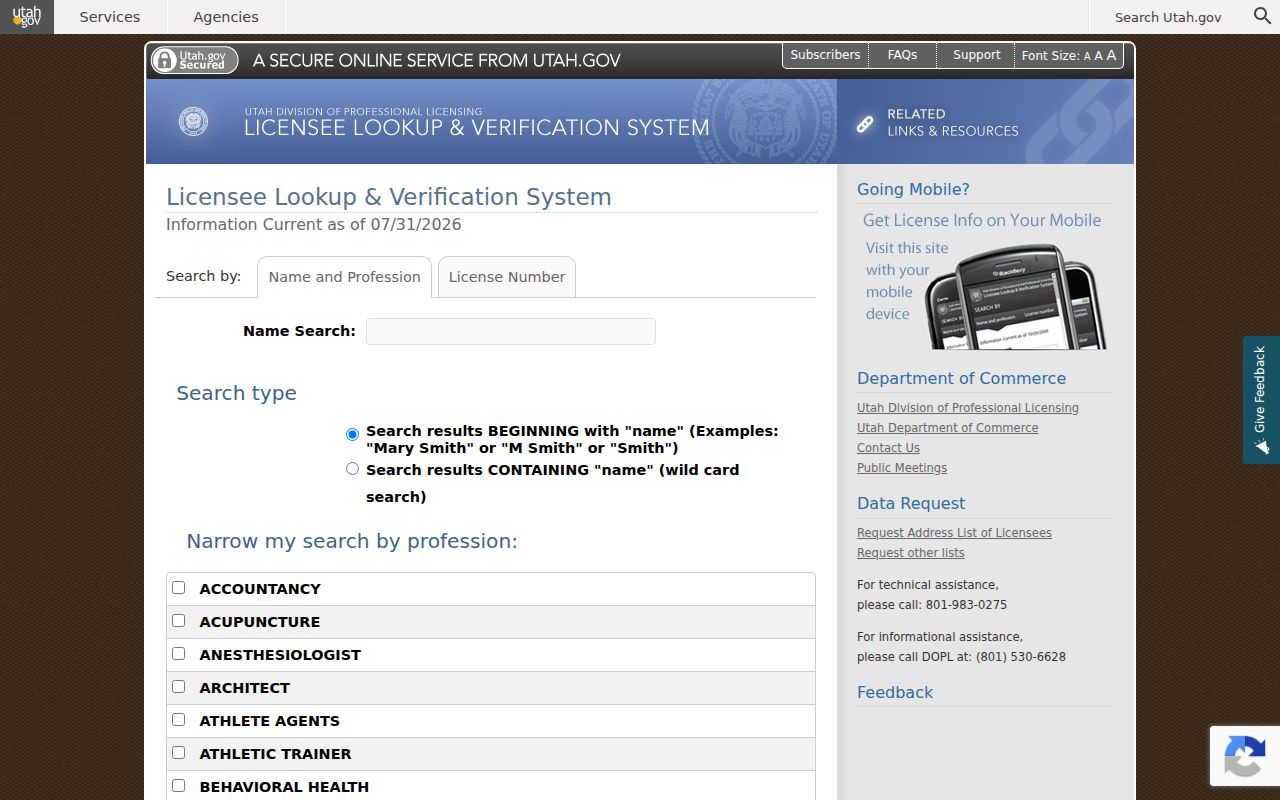
A registered agent is a service contact, not always an owner. A license address may be a practice or mailing address. Match the legal business name, status date, profession, parcel owner, and local license facts before deciding that records refer to the same person.
Orem Custody and Offender Searches
Different systems cover different custody. Utah County's inmate search is the route for county bookings, but its display may lag by 24 hours. Utah Department of Corrections covers people currently in state prison, probation, or parole. It is not the county jail roster. Federal Bureau of Prisons results cover federal custody from 1982 forward.
The Utah DOC offender search provides the state-supervision route pictured below.
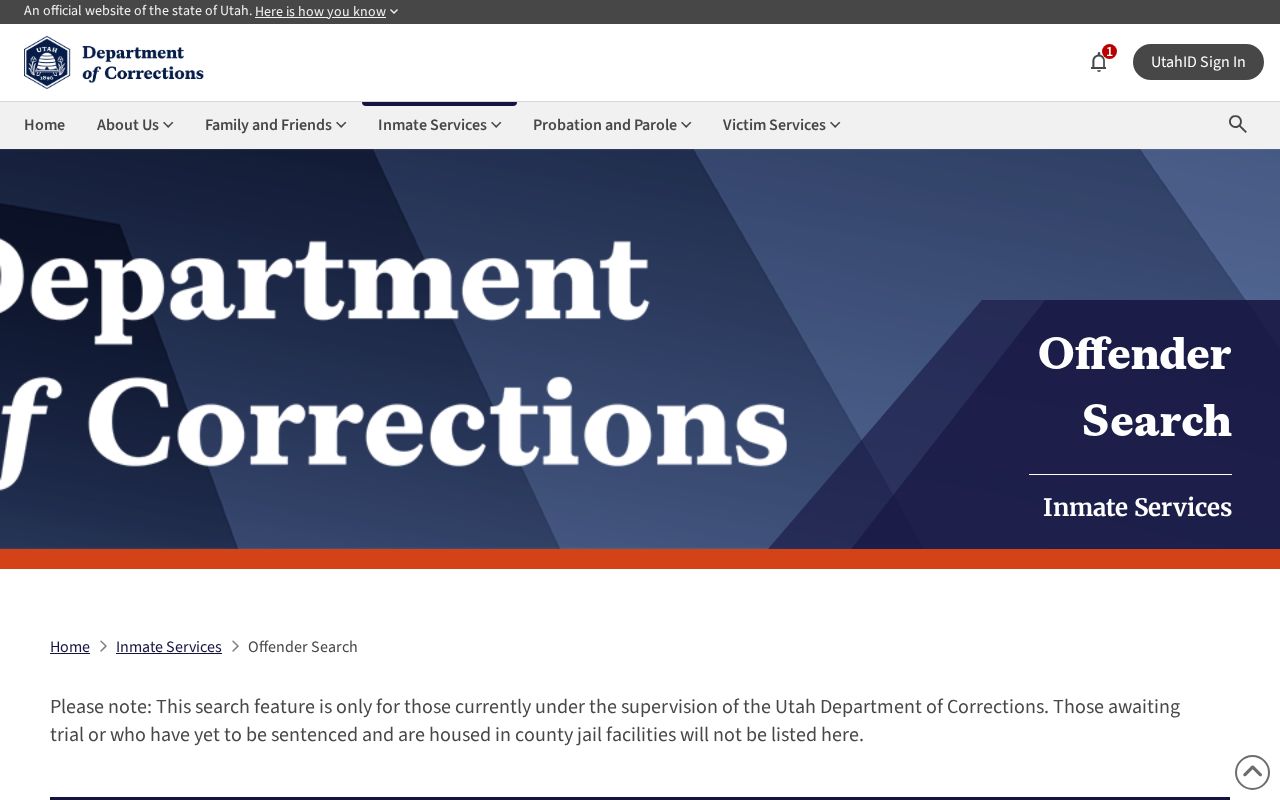
Use a booking or offender number with the name and date. A booking charge is not a conviction, and release from one agency does not establish status in another jurisdiction. For an Orem police incident record, use the police records request or counter and expect private or protected facts to be redacted.
Orem Voter Search Boundaries
Utah Voter Search is an identity-confirmation tool, not a surname browser. It requires first name, last name, full date of birth, street address, city, ZIP code, and reCAPTCHA. A successful self-lookup can return current status and polling information. A failed match should lead the voter to check the exact registered address or contact Utah County Elections, not to infer that another person is unregistered.
The public voter file is a different product. Public fields include legal name, voter ID, age range, address geography, districts, party, status, update date, and election participation. Full birth date, driver or state ID, Social Security number, email, and phone remain private. Vote history names elections in which a voter took part; it never reveals ballot choices. See the focused Orem voter records explanation for file access and at-risk privacy.
When an Orem Search Is Blank
No result is a prompt to change method. First confirm whether the record belongs to Orem, Utah County, a state office, or a federal court. Compare the record's creation date with the portal's actual online coverage. Remove narrow filters, test spelling and former-name variants, and use a parcel serial, legal description, license number, or case number when available.
Next move to the documented fallback. That may be a handwritten Recorder book, a free courthouse terminal, the court clerk, a library reference desk, an archive series, or a focused GRAMA request. GRAMA applies to retained government records, not a demand that staff answer a question or create a new report.
| Search route | Best evidence | Limit to remember |
|---|---|---|
| Official portal | Current index and identifiers | Online dates may be shorter than record dates |
| Office or terminal | Older books, images, and file access | Copy or certification fees may apply |
| Broad name database | Possible contact leads | May merge stale or same-name data |
Protecting Orem Search Privacy
Use personal records for lawful purposes and with restraint. Utah's at-risk voter classification suppresses identifying voter data for qualifying people and household residents. GRAMA also classifies some records as private, controlled, or protected. Sealed cases, recent vital records, and protected addresses do not become open merely because a related index is public.
Utah County Property Watch can send free notice when a deed, lien, or other instrument is recorded under a registered name or parcel. It does not block a filing and is not title insurance, but it can alert an owner to check the official record. Keep current records dated, verify material facts with the custodian, and never use a search to stalk, harass, threaten, or expose a protected person.